Do Chud The Builder’s Antics Prove Why FBAs Need a Hate Crime Bill?
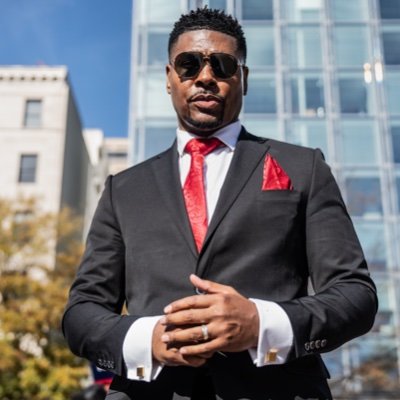
The Spaces centers on a sustained critique of how anti-Black harassment is being enabled in Nashville through the case of a streamer referred to as “Chud the Builder” (identified as Dalton Etherley), who films himself provoking and assaulting Black people while threatening pepper spray and worse. Host Tariq argues prosecutors and police are effectively permitting a hate-based business model, revealing unequal enforcement of general hate-crime statutes. He urges leveraging public outrage to demand an explicitly FBA-targeted hate-crime bill, citing group-specific protections for Asians (COVID-era bill) and Jews, and contends past bundling (e.g., the Matthew Shepard/James Byrd Jr. Act) diluted protections for Black people. He criticizes Democratic politicians for performative protests over redistricting while delivering few tangible benefits and remaining quiet about daily anti-Black harassment. Tariq praises Nashville residents’ restraint to avoid creating a martyr and warns of escalating risks if authorities don’t act. Callers add perspectives: Afro Elite highlights media double standards from “Stop Asian Hate”; Dan stresses immigrant gratitude and notes right-wing appetite to drop “buffer classes”; Edward (Zambia-born) calls for unity, while Tariq distinguishes delineation (lineage accountability) from division. The session closes with community updates and a museum event announcement.
Twitter Spaces Recap: FBA‑specific Hate‑Crime Protections, Law‑Enforcement Accountability, and Diaspora Tensions
Context and Key Participants
- Host: Tariq “Flex” Nasheed (founder of Hidden History Museum), referred to as “Flex”/Tariq; moderated the discussion, framed agenda, and took multiple callers.
- Call‑in participants (selected):
- TS Gerald (Democratic‑leaning perspective on voting rights and representation)
- Afro‑Elite (media critique from the Black left)
- Don Snow (commentary on Chud’s tactics and official tolerance)
- Dan (FBA delineation advocate)
- Edward (born in Zambia; urged unity rather than delineation)
- The Hive (asked about a streamer “Trev” and a coin controversy)
- Tank (parents from Nigeria; supported the need for hate‑crime legislation)
- Angela (supportive FBA listener from Prince George’s County, MD)
- Paul (America‑First conservative; asked about a Robert Smalls film and coalition‑building)
- Several unnamed/troll callers challenged FBA claims or pushed anti‑FBA talking points.
Core Issue: “Chud the Builder” (aka Dalton Etherly) and Unequal Enforcement of Hate‑Crime Laws
- Tariq’s framing:
- Allegation: Dalton Etherly (“Chud the Builder”) is building an online platform by targeting and antagonizing Black people in Clarksville/Nashville—using racial slurs, threatening/using pepper spray, and making physical contact—while recording content for monetization.
- Law‑enforcement tolerance: Local police, prosecutors, and DAs are “allowing” the harassment; incidents are being rationalized as protected speech despite physical escalation. Tariq argues this official non‑response signals unequal enforcement of existing hate‑crime statutes.
- Differential enforcement argument:
- Compares to New York cases in which arguments with Asian individuals drew hate‑crime charges for Black defendants based on alleged slurs alone. Claims Etherly’s repeated anti‑Black harassment would draw swift charges if directed at Jewish, Asian, or Arab communities.
- Cites “social contract” rhetoric used to justify vigilante actions (e.g., Jordan Neely case in NYC) and contends Etherly’s daily conduct similarly breaks the social contract.
- Specific protection for FBAs:
- Calls for a targeted hate‑crime bill specifically for Foundational Black Americans (FBAs), modeled on the way other groups (Jewish communities, LGBT people, Asian Americans via the COVID‑19 Hate Crimes Act) received tailored legislation and resources.
- Argues general hate‑crime laws dilute the unique, historically rooted anti‑Black hostility FBAs face and are inconsistently enforced.
- Historical comparisons and critique of bundling:
- Points to the Matthew Shepard and James Byrd Jr. Hate Crimes Prevention Act, asserting the policy’s enforcement benefits LGBT communities more than Black Americans and criticizing “bundling” that, in his view, equates non‑analogous harms and diffuses protections for FBAs.
- Policy proposals and leverage:
- Use Etherly’s growing notoriety to press for FBA‑specific anti‑hate legislation as a voting precondition.
- Criminalize the “harassment‑as‑a‑business‑model” dynamic where creators profit from anti‑Black intimidation.
- Establish accountability for law enforcement, prosecutors, and municipalities that fail to intervene; if violence occurs, pursue civil liability against cities for negligence/complicity.
Community Strategy: Restraint, Avoiding Martyrdom, and Escalation Risks
- Tariq’s assessment of Nashville’s response:
- Commends Black residents for “strategic restraint”—avoiding violent confrontations despite provocation to prevent Etherly from achieving “martyrdom.”
- Frames Etherly as seeking “suicide by community” or a viral martyr exit to cement white supremacist notoriety (invokes Dylann Roof as an archetype of extremist martyrdom).
- Warns patience is finite; if authorities continue to do nothing, the risk of a violent encounter rises—especially if Etherly expands to places with different street dynamics (e.g., Memphis).
Political Dimension: Democrats, Representation, and “Tangibles”
- Critique of Democratic leadership and priorities:
- Tariq argues Democrats loudly condemn hate against other groups (immigrants, LGBT, Asians) and allocate rapid resources, but remain conspicuously quiet about anti‑Black harassment that does not yield immediate political upside.
- Maintains that Black voters are a reliable Democratic bloc yet receive few concrete deliverables; urges Black voters to condition support on policy (“tangibles”) such as an FBA‑specific hate‑crime bill.
- Redistricting and Voting Rights Act (VRA) debate:
- TS Gerald: Emphasized that most Black Americans live in Southern states; with Voting Rights Act protections eroded and Republican redistricting, Black representation and voice are at risk. Named southern Black members of Congress (e.g., Jasmine Crockett, Alma Adams) and warned the Court’s direction imperils representation.
- Tariq’s counterpoint: Labels the redistricting fight as performative—politicians protecting “safe seats” rather than constituents. Argues that even with current Black representatives, the poorest districts remain under‑resourced and little has been delivered specifically to Black communities; sees renewed protest rhetoric as a gambit to preserve incumbents’ jobs.
Media Narratives and “Stop Asian Hate”
- Afro‑Elite’s contribution:
- Critiques legacy media (specifically ABC) for elevating claims that Black people were primary perpetrators during the COVID era, fueling anti‑Black stereotypes in the “Stop Asian Hate” narrative while being silent about Etherly. Concludes that both left and right media ecosystems willingly traffic in anti‑Black tropes when convenient.
Diaspora Debate: Delineation vs. Unity
- Recurrent theme: friction between FBA callers/host and some immigrant‑background callers over identity, accountability, and “unity.”
- Tariq/Dan’s delineation stance:
- “Delineation” is described as recognizing FBA lineage and holding non‑FBA immigrants accountable for their own actions (e.g., scams or crimes) instead of allowing blame to be absorbed by FBAs. Cites recent New York cases and a separate celebrity scam example to argue that negative acts by some immigrants have been generalized to Black Americans.
- Argues immigrants should acknowledge that FBA civil‑rights gains opened immigration doors and be “grateful,” while rejecting attempts by non‑FBAs to “cosplay” as FBAs when it is advantageous and disassociate when liabilities arise.
- Dan adds that some white nationalists now echo “delineation” logics (mentions Nick Fuentes’ remarks about buffer classes and discrimination, Donald Trump’s denaturalization posture) and warns immigrants that anti‑immigrant enforcement can intensify irrespective of Black‑immigrant debates.
- Unity appeals and pushback:
- Edward (Zambia‑born) urged Tariq to use his platform for pan‑Black unity rather than dividing along lineage lines, arguing shared interests against white supremacy.
- Tariq’s reply: delineation is not division; it’s lineage recognition and accountability. He maintains FBAs have shown unity through building U.S. culture and institutions and traveling/engaging with Africa, but rejects being conflated with non‑FBA identities or absorbing reputational costs from non‑FBA actions.
- Tariq/Dan’s delineation stance:
Other Caller Contributions and Notable Exchanges
- Don Snow: Emphasized Etherly is “being allowed” to operate and is picking easy targets; suggested either a Black person will confront him (and he’ll be framed as a martyr) or another white person may eventually check him.
- The Hive: Asked about a streamer “Trev” with a controversial coin and an altercation with Etherly; Tariq deferred to earlier commentary in the session.
- Tank (Nigerian background): After a tense back‑and‑forth, agreed that an FBA‑specific hate‑crime bill is needed and that pepper‑spray assaults on Black women are unacceptable.
- Angela (MD): Praised Tariq and the new Black media (Jason Black, Afro‑Elite, Black Alpha, Duan B) for centering Black men’s leadership and arming the community with information; expressed FBA pride.
- Paul (America‑First conservative): Called for a crowdfunded feature film on Robert Smalls; discussed possible coalition‑building with FBAs around “America first” priorities and reducing foreign influence. Tariq was receptive to more historical storytelling (noted his documentaries) and community‑based cultural work.
- Multiple troll callers: Recycled talking points (e.g., “Black crime is rampant,” “white people built America,” “FBAs don’t deserve reparations”), questioned host credibility, or tried to provoke. Tariq rebutted with counter‑statistics, lineage‑based claims of FBA cultural/economic contributions, and firm moderation.
Named Figures, Cases, and References Mentioned
- Individuals and incidents: Jordan Neely; James Byrd Jr.; Matthew Shepard; Dylann Roof; Jasmine Crockett; Alma Adams; Nick Fuentes; James Fishback; Byron Donalds; Donald Trump; Roland Martin; Frederick Douglass; Benjamin Banneker; Horace King; William Nesbit.
- Laws/policy themes: COVID‑19 Hate Crimes Act (targeting anti‑Asian incidents); Matthew Shepard and James Byrd Jr. Hate Crimes Prevention Act; Voting Rights Act and SCOTUS erosion; proposed FBA‑specific hate‑crime bill.
Key Takeaways
- Evidence of unequal enforcement: The repeated, filmed harassment of Black people by Etherly without decisive legal intervention is presented as proof that generic hate‑crime statutes are applied unevenly—prompting calls for protections tailored to FBAs.
- Political leverage point: Tariq urges Black voters to condition electoral support (especially for Democrats) on concrete deliverables, with an FBA‑specific hate‑crime bill as a near‑term litmus test.
- Strategic restraint: Community members are counseled to avoid confrontations that could create a white‑supremacist martyr; instead, document incidents, escalate complaints to prosecutors/oversight bodies, and prepare for civil litigation if municipal negligence contributes to harm.
- Diaspora dynamics: A live contention persists between delineation (lineage‑based accountability and specific policy asks) and appeals to pan‑Black unity—surfacing anxieties about identity, representation, gratitude, and shared struggle.
Suggested Next Steps Raised in the Space
- Policy and advocacy:
- Draft and promote an FBA‑specific hate‑crime bill that addresses targeted, repeated public harassment and its monetization.
- Build a public record: Collect, archive, and submit incident evidence to local DAs, state AGs, and civil‑rights divisions; file formal complaints when police/prosecutors decline to act.
- Pursue municipal accountability: Explore claims for negligent protection or civil‑rights violations if a foreseeable harm occurs after repeated warnings.
- Political organizing:
- Communicate clear voter demands tied to the hate‑crime bill and law‑enforcement accountability; withhold support where demands are ignored.
- Expand alliances selectively (e.g., with America‑First voices willing to oppose foreign influence and support FBA priority policies) without diluting FBA‑specific objectives.
- Community practice:
- Continue de‑escalation and documentation to avoid martyr traps; coordinate legal observers when possible.
- Educate on delineation vs. division: clarify that lineage recognition and accountability are not anti‑unity but pro‑specificity and protection.
Closing Notes and Event Plug
- Tariq promoted an upcoming “Memorial Weekend Mic Drop” at the Hidden History Museum (Saturday, May 23, 7 pm; tickets at HiddenHistoryMuseum.com) and encouraged continued community engagement around history, culture, and policy.