Killer Whales S2 Ep1 Watch Party & Roundtable – Whales, Projects & Par
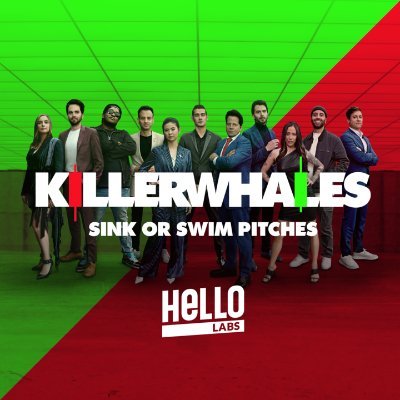
The Spaces recapped a live watch party for Killer Whales Season 2, Episode 1, blending real-time viewing with producer and project commentary. Host Nathan and producer Paul outlined a watch–discuss cadence, noted ~1.5M views in 48 hours, and emphasized judges’ unscripted authenticity. Three pitches were reviewed: Karate Combat (token-governed fight league) impressed on entertainment but sank due to weak tokenomics transparency and low on-chain activity; Brett on Base (meme coin) earned 4/5 swims by compellingly arguing culture and community power despite Scaramucci’s regulatory concerns; Particle Ink (AR+AI+Web3) secured 3/5 swims with an MGM licensing deal and innovative context-aware “FAM” companions, while facing runway and numbers scrutiny. Sponsors and ecosystem partners were featured: CoinStats’ portfolio tracker; Galaxis’ dynamic NFTs, badges and hoodie redemption; Hello Club staking, quests and prediction markets tied to episode outcomes. Producers Paul and Vince highlighted Season 2’s shift toward culture alongside utility, the importance of tokenomics clarity, and a commitment to building a mainstream-ready, community-driven show.
Killer Whales Season 2 Episode 1 Watch Party — Summary & Analysis
Session Overview and Participants
- Host: Nathan (coordinating the X/Twitter Spaces watch party and a synchronized livestream via the Killer Whales account; highlighting pinned stream and panel audio integration).
- Producers/Team: Paul (producer), Ninja Vince (producer), Sander (producer and organizer), Shotgun (co-host, pinning livestream), Bunny (speaker), CoinStats representative (sponsor), Galaxis CEO (partner), Particle Ink founders.
- Projects featured in Episode 1: Karate Combat, Brett (meme coin on Base), Particle Ink (Kaleidoco).
- Judges/Whales featured (as introduced in-show): Ran Neuner, Mario Nawfal, Anthony Scaramucci, Tracy Chen, and Illmind (Grammy-nominated producer; the narration references a Yuga Labs-related role). Note: names/bios were delivered by the episode narrator.
- Community Guests: Crash (OG from Brett community), Brett presenter Jake, Particle Ink’s Cassandra Rosenthal and Jennifer Tuft.
- Viewership milestone: Paul reported ~1.5 million views across X in ~48 hours for Season 2 content.
- Format: Watch party alternated between viewing each pitch on the livestream and live panel commentary/Q&A in Spaces.
Season 2 Production Philosophy & Format Adjustments
- Greater authenticity: Producers emphasized Season 2 reduced producer steering compared with Season 1, letting judges lead organically and be more rigorous, especially on tokenomics.
- Cultural blend: The show purposefully combines "serious business TV" with web3’s degen culture, leaning into real, raw judge debates and entertainment segments (e.g., staged on-set moments like Mario’s fight demo).
- Diversity of projects: Mix now includes utility and culture/community-driven web3 (e.g., meme coins), reflecting audience feedback from Season 1 and broader mainstream streaming audiences (Amazon, Apple TV).
- Technical note: Some minor livestream audio delay noted early; team planned to adjust mid-session.
Pitch 1: Karate Combat (Web3-Governed Combat Sports League)
Core Concept
- Presenter: Robert Bryan (founder).
- Product: A combat sports league governed and gamified by a token; immersive live events using Unreal Engine and precise camera tracking; fans allocate tokens pre-bout to fighters they believe will win.
- Claimed traction: TV presence in 100+ countries, 40M live views at last Dubai event, app engagement growing ~50% per month, and governance claims (fans over 50% control).
- Token utility (as pitched): Pre-bout token allocation by fans; winning allocations earn additional tokens; 10% of the pool distributed to fighters to better compensate athletes; governance covers rule sets, fighter prospects, and other league decisions.
On-Stage Demo & Entertainment
- A fighter demo: Mario volunteered; the fighter tossed Mario, which delivered comedic relief and strong entertainment value.
- Producer insight: Mario initially wanted a no-gear fight to knockout, but pivoted to protective gear when he saw the fighter. Producers acknowledged audience appetite for seeing Mario “take one,” but stressed balance between spectacle and substance.
Judge Q&A Themes
- Market fit: Why karate? Robert differentiated from UFC/MMA (shorter rounds, reduced blood-heavy techniques like elbows; positioned as # 2 in combat sports but distinct).
- Web3 necessity: Anthony asked why tokens vs cash wagering; Robert argued tokens enable incentivization, fan governance, and protocol-like structures for rules/fighter selection without downside of cash betting.
- Token distribution transparency: Judges pressed for exact insider/team token percentages; Robert emphasized fans hold >50% but avoided specific breakdowns.
- On-chain data vs narrative: Tracy highlighted low on-chain metrics (approx. $4,000 24h DEX volume; ~150 on-chain transactions in the prior week), challenging the token utility and adoption claims.
Vote Outcome & Rationale
- Vote sequence revealed increasing skepticism:
- Pro-governance angle: One judge liked disintermediating middlemen and empowering fighters/fans; awarded a swim.
- Tracy: Cited weak on-chain data and unclear token utility; sink.
- Scaramucci: Praised product/energy but questioned blockchain necessity; swim.
- Ran Neuner: Concerned about centralization/opacity in tokenomics; sink.
- Mario: Praised the Web2 business and live events, but feared the token would damage the business; sink.
- Final result: Sink (majority sinks). Takeaway: Strong entertainment and a compelling sports product did not overcome tokenomics transparency concerns and weak on-chain traction in the judges’ eyes.
Key Takeaways
- In Season 2, tokenomics scrutiny is intense: Lack of specific token distribution and weak on-chain metrics were decisive.
- Web2 strength isn’t enough to justify a token without clear, transparent, and community-aligned mechanics.
- Entertainment helps but cannot substitute for robust business/token fundamentals.
Pitch 2: Brett on Base (Meme Coin)
Core Concept
- Presenter: Jake (community member and content creator; drove in with a cybertruck for showmanship).
- Thesis: Meme coins are community/culture-driven assets; “He who controls the memes controls the universe” (Elon Musk quote). Brett is positioned as Base chain’s flagship meme coin, with Coinbase Wallet homepage exposure.
- Market framing: Meme coins are top-20 cryptos and outperformed many L1s in 2024; Brett is currently among the top meme coins globally by the presenter’s claims.
- Role & founders: Jake is a community content creator; founders not disclosed. He used Satoshi’s anonymity as a precedent, arguing founder anonymity suits meme culture.
Judge Q&A Themes
- Base explainer: Jake simplified Base as a Coinbase-launched chain aiming to onboard hundreds of millions.
- Ownership & fairness: Tracy probed insider holdings and potential for pump/dump; Ran led a broader fairness debate about retail disadvantages and lack of transparency.
- Systemic risk & regulation: Scaramucci warned from a macro/regulatory perspective that such projects attract regulatory ire and pose societal concerns.
- Community vs utility: Jake argued that meme coins’ value lies in culture, attention economics, and democratizing access vs VC-driven structures; retail chooses to buy/sell; cycles and volatility are acknowledged.
Vote Outcome & Rationale
- Ran Neuner: “Can’t bet against Brett” when betting on community/memetics; swim.
- Mario Nawfal: A bet on meme coins and Base; swim.
- Judge (entertainment/prod.): Initial skepticism melted after Jake held his ground; swim.
- Tracy Chen: Recognized meme coins’ wave-making; set high expectations; swim.
- Anthony Scaramucci: Charismatic presenter but fundamentally disliked the project’s macro/regulatory implications; sink.
- Final result: 4 swims, 1 sink — Brett swims.
Community & Producer Reactions
- Crash (Brett OG): Praised Jake’s performance; noted relief seeing Ran’s positive stance; stressed transparency via public wallet.
- Paul: Highlighted the pivotal “Satoshi” line and how meme coins rely on myth and community; expected a sink but Jake turned it around.
- Nathan/Sander: Emphasized Season 2’s openness to culture/community projects and that utility isn’t the sole measure of viability.
Key Takeaways
- Judges acknowledged meme coins’ cultural impact and the Base ecosystem’s momentum.
- Founder anonymity can be a feature, not a bug, in meme coin culture.
- Regulators remain a looming concern; not all judges will accept culture-over-utility projects.
Pitch 3: Particle Ink by Kaleidoco (AR + AI + Blockchain Storyliving)
Core Concept
- Founders: Cassandra Rosenthal and Jennifer Tuft (co-CEOs).
- Product: Augmented Unification Platform combining AI, AR, and blockchain, enabling 3D NFTs (“fam companions”—friends, assistants, mentors) to contextually understand environments, learn, build memory, and interact across day-to-day life. The tech supports gaming and real-world contextual interactions.
- Demonstration: Interactive AR experience with judges; characters respond to room context (e.g., a character recognizing a bedroom and initiating a pillow fight), highlighting tech beyond simple AR “moments.”
- Business model & partnerships: Licensing model for immersive experiences; 4-year partnership with MGM (Las Vegas live experience); reported ~$40K/month licensing revenue from MGM; team size ~11; some team compensated via equity. Raised a seed of ~$7M via rolling close (convertible note started in 2018; lead investor in 2020), plus founders’ own ~$1.5M. Founders invested their life savings; mission-driven.
Judge Q&A Themes
- Differentiation: Beyond static AR experiences—context-aware, persistent, interactive characters tied to user environments and evolving with the user.
- Financials/runway: Judges challenged runway given burn vs revenue, team costs, and the timeline since the 2018–2020 raise; asked how much of the $7M remained and why funds seemed near depletion by early next year.
- Market clarity: Some judges found the product positioning confusing for mainstream marketing; the producers noted the edit was tricky due to many components (AI, AR, NFTs).
Vote Outcome & Rationale
- Performance and potential: One judge acknowledged competitiveness in web3 gaming but praised the MGM-scale proof of concept and founders’ ambition.
- Tracy Chen: Highlighted gendered biases in evaluation (“women measured by performance, men by potential”), affirmed the founders’ potential; swim.
- Scaramucci: Concerned about runway pressure and founders’ personal financial exposure; advised seeking a merger partner; sink.
- Mario Nawfal: Numbers didn’t add up for him; confusing product to market; emphasized $7M + $1.5M invested yet runway short; sink.
- Ran Neuner (tiebreaker): Backed the founders on entrepreneurial grit and resilience; swim.
- Final result: 3 swims, 2 sinks — Particle Ink swims.
Post-Show Founder Updates (Live Space)
- Cassandra: Watching oneself on TV is tough; acknowledged reality TV edits compress complex tech; emphasized ongoing development since filming.
- Advances: Evolving “fam companions” with emotional intelligence, memory, and contextual awareness; applications expanding to sports, retail, hospitality. Focus on AI integration, data ownership/monetization via blockchain, and “play-generated worlds.”
- Producer note (Paul): This pitch took longest to edit for clarity; balancing mainstream digestibility with technical depth and conveying founder personalities.
Partner Spotlights and Ecosystem Activations
CoinStats (Sponsor)
- Product: Portfolio tracking across 120+ chains and major exchanges; consolidated wallet/exchange data; tools for research, management, and exit strategies.
- Testimonial: Ninja Vince endorsed CoinStats as his most accurate go-to tracker since 2017/2018 (unsolicited).
Galaxis x Killer Whales Season 2 NFT Collaboration
- Dynamic NFT community membership cards with episode badges (animated, interactive badges planned during streaming windows), decentralized web shop features, redeemables.
- Payments: Integrated Hello token for badges and merch; staking Hello and Galaxis tokens to participate.
- Rewards: Collect all five episode stickers to get 50% off a Killer Whales Season 2 hoodie (exclusive via Galaxis at this time).
- Major perk: Lottery among participants to fly one winner to Hollywood/Los Angeles as a VIP guest for Season 3 production.
Hello Club (Hello Labs Ecosystem)
- Staking: Stake Hello tokens for rewards allocations sourced from real ecosystem revenue (DEX fees, prediction markets, etc.); APRs fluctuate and are not "promised" APYs.
- Questing: Super Boost Quest active; integration of Killer Whales-related tasks (e.g., Particle Ink giveaway, Galaxis tasks) to earn boosted rewards.
- Prediction Markets: New markets aligned with Killer Whales outcomes (e.g., will any project get 5/5 swims or 0/5 this season; upcoming Episode 2 project swim/sink markets).
Producer Insights & Meta Commentary
- Judges took control in Season 2: Less producer scripting, more genuine judge perspectives; projects are held accountable.
- Entertainment vs substance: Spectacle (e.g., cybertruck entrance, fight demo) is welcome, but judges still dig into numbers, tokenomics, and market fit.
- Culture counts: Season 2 intentionally showcases meme culture as a valid web3 value driver, not only utility projects.
Logistics, Community Notes, and Next Steps
- Technical: Minor audio delay acknowledged; team planned to improve sync.
- Community engagement: Strong turnout and reactions across X and YouTube; panel encouraged feedback (positive or negative) to continue refining the show.
- Schedule: Episode 2 drops next Wednesday (19:00 UTC); next Friday will feature another watch party at the same time.
Key Highlights & Lessons Across All Pitches
- Tokenomics transparency is non-negotiable: Judges will challenge opaque distributions and weak on-chain evidence.
- Culture/community can win without conventional utility: Brett’s swim shows that strong narrative/community can carry a project if it stands up under questioning.
- Founders matter: Particle Ink’s vote hinged on backing committed entrepreneurs with credible partnerships and a compelling vision, even amid operational questions.
- Entertainment amplifies, but fundamentals decide: Karate Combat’s thrilling demo wasn’t enough to offset tokenomics doubts.
Named Participants and Roles (as used in the session)
- Nathan (host/moderator)
- Paul (producer)
- Ninja Vince (producer)
- Sander (producer)
- Shotgun (co-host)
- Bunny (speaker)
- Rob/Robert Bryan (Karate Combat founder/presenter)
- Jake (Brett community presenter)
- Crash (Brett OG community member)
- Cassandra Rosenthal & Jennifer Tuft (Kaleidoco / Particle Ink founders)
- CoinStats representative (sponsor)
- Galaxis CEO (partner)
- Judges/Whales (as introduced in-show narration): Ran Neuner, Mario Nawfal, Anthony Scaramucci, Tracy Chen, Illmind
Final Outcome Recap
- Karate Combat: Sink
- Brett on Base: Swim (4/5)
- Particle Ink: Swim (3/5)
Closing
- Producers and host thanked projects, whales, partners, and viewers; reiterated commitment to making crypto mainstream-ready while preserving authenticity.
- Call to action: Follow featured projects and partners; participate in Galaxis x Killer Whales community; stake on Hello Club; join giveaways and prediction markets; return for Episode 2 next week and the subsequent watch party.