Late Night Tap-in with Tariq Nasheed #FBA
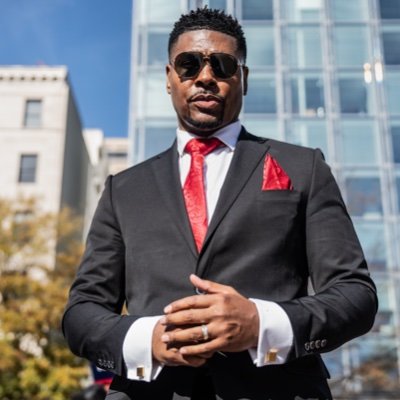
The Spaces centers on a Chicago cross‑burning case and uses it to examine anti‑Black intimidation, selective use of hate‑crime statutes, and the optics of justice. Host Tariq argues the suspect’s claim of “anti‑MAGA” protest is implausible given the cross’s historic meaning, and contends authorities apply hate‑crime charges inconsistently—swift with non‑White perpetrators but reluctant with White supremacist violence. A major thread is law‑enforcement’s growing reliance on facial‑recognition and private data brokers, and the civil‑liberties risks of warrant‑free, mass surveillance framed as public safety. The room links these tools to why some crimes against Black people go “unsolved,” asserting non‑resolution can be a choice. The second arc shifts to economics: a live boycott of some Asian‑owned stores, a push to prioritize foundational Black American (FBA) businesses, how to verify what is truly Black‑owned, and a call to acquire distressed assets—invoking Robert R. Church in Memphis as precedent. Callers share surveillance anecdotes, debate Afrobeat and cultural influence, discuss workplace navigation under racism, and press delineation between FBA and immigrant identities amid trolling interventions. The session closes with community gate‑keeping of lineage, practical buy‑Black guidance, and plugs for FBA institutions.
Tap-In Twitter Space Summary and Analysis
Overview
This session, hosted by Tariq, centered on a high-profile cross-burning incident in Chicago, broader themes of anti-Black intimidation, selective application of hate-crime statutes, the escalation of facial recognition and surveillance technologies, and ongoing FBA (Foundational Black American) economic strategy and delineation debates. The room also featured contentious exchanges with several callers and trolls, alongside practical discussions about workplace navigation and investment.
Chicago Cross-Burning Case (Grant Park)
- Incident summary:
- A wooden cross was constructed and burned in Chicago’s Grant Park in broad daylight.
- Suspect identified as Merlin Loo (also referenced as “Lu”), age ~21, a chemistry student living in Chicago’s Little Italy.
- Police reportedly used facial recognition to identify him; he admitted to building and burning the cross.
- Charges include two felony hate-crime counts, felony arson, felony criminal damage to state-supported property by fire, and misdemeanors including disorderly conduct, reckless conduct, criminal damage to property, and cross burning to intimidate.
- Reported court outcome at time of discussion: released pending trial with conditions including a ban on purchasing fire-starting items.
- Suspect’s stated motive and host’s critique:
- Loo claimed a “solo political protest” against Donald Trump and “MAGA Christian nationalists,” placing a red MAGA hat atop the cross to target that base.
- Tariq’s analysis: Cross burning in the U.S. is a fixed symbol of anti-Black terror (tied to the KKK and lynchings), not a neutral canvas for protest. Referenced Virginia v. Black (U.S. Supreme Court) describing cross burning as a virulent form of intimidation. Combining a MAGA hat with cross burning symbolically reads as endorsement of white supremacist ideology, not protest against it.
- Tariq rejected claims of ignorance given the cultural ubiquity of cross burning’s meaning in U.S. history and media.
- Non-white complicity in anti-Black racism:
- Tariq argued that modern far-right movements often include non-white members unified by anti-Blackness, citing Asian conservative figures (e.g., Ian Miles Cheong, Andy Ngo, Tila Tequila) as examples.
- Possible social context:
- Suggested the act could reflect retaliatory symbolism amid rising Black boycotts of certain Asian-owned businesses following cases like the killing of Cyrus Carmack-Belton in South Carolina (referred to as “Cyrus”), where the community alleges wrongful accusation and a lenient legal response.
- Caller input:
- Marcus (Chicago) reported that in a news interview, the suspect referenced watching The Birth of a Nation, reinforcing awareness of the symbolism.
Hate-Crime Statutes and Optics
- Tariq’s thesis:
- Prosecuting an Asian suspect for cross burning serves as a “sacrifice” that visually validates hate-crime laws without confronting the structural nature of white supremacist violence.
- Asserts that authorities often resist applying hate-crime enhancements to white perpetrators to avoid acknowledging systemic ideology.
- Cases cited by Tariq (as examples of selective enforcement):
- Tennessee case involving a white supremacist livestreamer known as “Chud” (name unclear in transcript) who allegedly shot Joshua Fox after racist online posts; claimed no hate-crime enhancement despite clear animus.
- Lee County, Georgia case: a white supremacist allegedly used slurs and opened fire with an AK-style rifle at a Black family reunion; reportedly no hate-crime charge and an unusually low bond ($5,000).
- Policy position:
- Tariq called for a lineage-specific hate-crime bill for FBAs to prevent selective application and political convenience.
Facial Recognition and the Expanding Surveillance State
- How Loo was identified:
- Tariq said Chicago police leveraged facial recognition, highlighting its speed and reach (cross-referencing millions of images in seconds) across DMV, state ID, and social media databases.
- Broader concerns:
- Mass surveillance tools are deployed under a public safety/anti-terror rubric but often expand to monitoring dissidents and over-policing Black communities.
- Law enforcement often downplays AI/facial recognition in public narratives to avoid constitutional scrutiny (Fourth Amendment concerns over warrantless mass surveillance).
- Private vendors like Clearview AI scrape billions of images and sell services to agencies, bypassing certain oversight.
- Everyday actions—phone face unlocks, social media tagging, DMV renewals—feed the data ecosystem.
- Unsolved crime skepticism:
- Tariq argued that the capacity exists to solve many crimes but non-enforcement occurs when crimes target Black people or intersect with state actors. Cited Tupac Shakur’s 1993 Atlanta shooting of two off-duty white officers later found with illegally obtained weapons as an example of law enforcement misconduct.
- Caller corroboration:
- Professor Allan: Marines warned TikTok was used by China for face/identity data harvesting; anecdote about a Walmart surveillance console in Memphis revealing customer bios.
- Tariq recounted JFK arrival where cameras matched his identity without presenting a passport.
Economic Strategy: Boycotts, Reinvestment, and Distressed Assets
- Boycott-to-ownership thesis:
- Party Prince urged the community to move from protest to acquisition of distressed assets and companies, noting baby boomer retirements and opportunities for buyouts.
- The host agreed and referenced Robert R. Church Sr. in Memphis, who bought depreciated real estate during a yellow fever crisis, catalyzing a Black economic district.
What Counts as “Black-Owned” in a Delineated Era
- Context:
- “Buy Black” momentum is strong, with emphasis on foundational Black American (FBA) ownership and community reciprocity.
- Tariq’s position:
- “Buy Black” is a grassroots reparative strategy aimed at addressing harms unique to descendants of U.S. slavery (slavery, Jim Crow, redlining, asset stripping).
- Concern that some immigrant-owned businesses (African, Caribbean, Asian, Hispanic) now brand themselves as “Black-owned” to capture redirected FBA consumer spending, despite historically distancing from Blackness.
- Structural differences noted: many Black immigrants entered via selective visa programs, often with higher education/capital, differing from FBA entrepreneurs facing multi-generational discriminatory barriers.
- Mislabeling problem: reported instances on delivery apps listing non-Black businesses as “Black-owned”; cited the Bay Area as an example. Caller Blacktastic corroborated.
- Historical caution: During the 1992 Los Angeles unrest, some non-Black businesses reportedly posted “Black-owned” signs to avoid being targeted.
- Net: Prioritizing FBA-owned businesses is framed as targeted community uplift with an expectation of reciprocal community support and cultural alignment.
Cultural and Diaspora Tensions
- David Oyelowo controversy:
- Tariq criticized Oyelowo for allegedly saying the Black American accent is “a Nigerian accent slowed down,” calling it disrespectful given Oyelowo’s casting in iconic FBA roles (MLK, Bass Reeves).
- Troll interactions:
- “Jesus” (self-described Somali) taunted about being a “buffer class” undermining reparations; Tariq challenged the caller’s claimed benefits vis-à-vis their homeland.
- Multiple East African and Middle Eastern-claimed callers engaged in trolling; Tariq rebuffed, questioning identities and motives.
- Afrobeats/“football” debate (Platinum – Nigerian in Britain):
- Platinum argued Americans try to claim Afrobeats and insisted “football” is the global term for soccer.
- Tariq countered that Fela Kuti cited James Brown as an influence and that many Afrobeats records sample or are structurally influenced by FBA R&B/funk; emphasized cultural centrality of FBA contributions. Debate devolved, reflecting broader culture-ownership tensions.
- Tariq also asserted FBAs were instrumental in exposing colonial atrocities (e.g., Congo under King Leopold II) and aiding African independence movements, citing figures like Ralph Bunche.
Workplace Navigation and Racism
- Caller Leak asked for advice navigating corporate racism.
- Tariq’s guidance:
- Learn all you can and aim to build your own business eventually.
- Recognize racial hierarchies in white-owned corporate environments.
- Be cordial but maintain boundaries; don’t assume friendships.
- Noted specific dynamics: white women undermining attractive Black women; tolerance for “non-threatening” (e.g., effeminate) Black men in some offices; keep focus on skills and exit strategy.
- Saturn shared an anecdote about being undermined and replaced in an Asian-dominated card room after discussing entrepreneurial ambitions.
Identity Vetting and Cultural Competency
- “Nicole” segment:
- Delivered spiritual/poetic framing (year of the horse, universalism, nature, “spiritual justice”), challenged focus on delineation.
- Denied white supremacy’s salience in her life, acknowledged having dated a white person (described as brief/experimental).
- Claimed an upbringing across Texas and Michigan; Queen Mother Empress (Detroit-based) challenged Michigan familiarity; multiple listeners flagged a Caribbean/Latina accent and perceived inconsistencies about grandparents and regional knowledge.
- Great Black Shark cautioned against spending time on willfully obtuse arguments and stressed the need for specific, actionable discourse.
- A cultural litmus was applied around Black church call-and-response and other community-specific references; she couldn’t answer common prompts (e.g., the “God is good…” call-and-response), which raised further doubts about her claimed FBA cultural grounding.
- “NotFast” segment:
- Introduced “black fatigue” as whites being “tired of Black behavior,” cited an interracial murder case as a touchpoint.
- Tariq challenged the framing and tested cultural familiarity (seasoning norms; the ubiquitous “you smell like outside” reference after kids play outdoors). The caller failed these tests and ultimately acknowledged being Latino of northern Mexican heritage while residing in Tennessee.
- Takeaway: Room reinforced a norm against cosplaying FBA identity to push anti-Black talking points.
Additional Caller Notes
- Marcus (Chicago): Affirmed tech capabilities in Chicago (license plate capture from trucks, broad surveillance coverage), aligning with Tariq’s point that authorities can solve crimes when they choose.
- Blacktastic: Praised FBA-centric reporting; backed Bay Area “Black-owned” mislabeling observations.
- Great Black Shark: Urged rigorous focus and refusal to entertain bad-faith or vague arguments; suggested pressing diasporan critics on how they’re continuing their own ancestors’ concrete legacies today.
- Stone and other supportive callers: Marked Juneteenth, noted increased trolling likely tied to the holiday.
Key Themes and Takeaways
- Symbolism matters: Cross burning is a uniquely anti-Black terror symbol in U.S. history; attempts to reframe it as general political protest lack credibility.
- Selective justice optics: Applying hate-crime charges to non-white suspects can serve as a low-cost signal of fairness while avoiding systemic confrontation with white supremacist violence. Tariq called for lineage-specific hate-crime protections for FBAs.
- Surveillance realism: Facial recognition and integrated data infrastructures are now pervasive and often understated in law enforcement narratives. Mission creep poses risks to civil liberties and disproportionately impacts Black communities.
- Economic agency: Boycotts should evolve into ownership. Historical precedents (e.g., Robert R. Church Sr.) show wealth-building via distressed assets. The “Black-owned” label should align with FBA community reciprocity and transparency to ensure intended benefits.
- Cultural delineation: FBA delineation is about lineage-specific harms and remedies. The room remains vigilant against mislabeling, identity cosplaying, and diaspora discourse that minimizes FBA contributions or appropriates FBA culture.
- Workplace pragmatism: Acquire skills, keep professional distance, recognize office politics, and plan entrepreneurial exits where possible.
- Moderation posture: Elevated guard against trolls and bad-faith interlocutors, with community-driven cultural tests to vet claims of shared identity and experience.
Action Items and Community Guidance
- Continue prioritizing FBA-owned businesses and verify ownership claims (apps, directories, and storefronts can mislabel).
- Maintain strategic boycotts while identifying opportunities to acquire distressed assets and businesses.
- Advocate for clear, enforceable, lineage-specific hate-crime legislation.
- Educate community members on surveillance realities; support civil liberties efforts challenging unregulated facial recognition and data brokerage.
- Preserve and protect FBA cultural institutions (e.g., support the Hidden History Museum) and practice media literacy around viral incidents and official narratives.
Closing
Tariq closed by thanking contributors, reiterating support for the Hidden History Museum (encouraging weekly/monthly contributions), and promoting Black-owned products. The space underscored a consistent throughline: protect FBA interests through targeted economics, cultural clarity, political advocacy, and vigilance against both overt and covert anti-Black tactics.